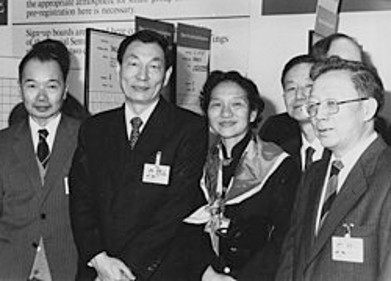
Zhu Rongji (朱镕基), former Premier of the People’s Republic of China (“PRC”), died on 12 August 2026, at the venerable age of 97.
His death has prompted an outpouring of adulatory pieces in Chinese media, but has also made clear again how much China has changed since 2012, and how unintended consequences follow all reforms.
Zhu’s record
Zhu’s passing underlined his effectiveness as an economic reformer. He successfully restructured China’s state-owned enterprises, recapitalized the insolvent financial system, and altered taxation, in the face of intense opposition from vested interests, such as the People’s Liberation Army (“PLA”).
Zhu also won a great deal of thanks for his determination to hold the value of the Chinese yuan firm during the 1997 Asian financial crisis, and led China’s efforts to join the World Trade Organisation (“WTO”).
This page has previously looked at Zhu’s record, particularly in the context of his role in establishing mechanisms aimed at recapitalizing China’s banks in the late 1990s, through the creation of various “bad banks”.
That piece, which was written in December 2023, noted that a model thus existed for debt forgiveness and measures that could resolve the property crisis in China – and so showed a hopeful note. Sadly, that hope has proven misplaced.
The property crash
In today’s China, Zhu’s sentiments no longer hold sway.
At the least, no one has reformed the property (and associated financial) markets as Zhu did the banks in the 1990s. Rather, a prolonged slump continues; property investment in China fell by 19% in the first six months of 2026, on 2025, and sales prices remain stagnant, suggesting that the collapse that started in 2020 has yet to reach its bottom.
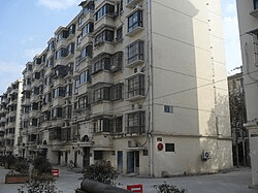
The property slump is also of note, too, as it came about as a result of Zhu’s measures. His tax reforms resulted in a steep decline in tax revenues raised by local governments; the 1994 centralization of taxation resulted in a serious imbalance towards the central government.
In response, the local authorities sought funds elsewhere, including by stoking economic development, and especially in the period after China opened the financial floodgates in 2008 (a move ironically opposed by Zhu). One result was the runaway property boom.
Zhu’s legacy
Zhu’s death, then, highlights a mixed legacy. Certainly, his reforms laid the stage for a massive rise in growth. Equally, though, those reforms led in part to the inflation of the property bubble, and the long-lasting consequences that have followed since its collapse in 2020.
The scale of that slump is becoming clearer. The fall in China’s property sector now appears to amount to one of the greatest destructions of value in recent years, worth comparing with the US financial crisis of 2008, or to the slump that Japan endured during the 1990s.
Former Chief Economist at the International Monetary Fund (“IMF”) Kenneth Rogoff has made these comparisons, in his book Our Dollar, Your Problem. He noted that the implications for consumers have been especially acute, as property had long acted as a crucial store of value for China’s savers.
The property slump has also made less likely that China might succeed in shifting away from its dependence on exports, meaning that tensions with the European Union, the US and other economies will only rise as its goods ship out.
Unforeseen Consequences
Zhu’s life, then, is striking, as a testament to the law of unforeseen consequences in history – or perhaps how the best intentions can pave the way to hell.


Leave a comment