The inauguration of a new Chief Executive in Macau presages closer integration into mainland China, and policy shifts that could rein in the city’s vast casino sector, at the expense of investors. It also hints at a comparable future for Hong Kong.
A new Chief Executive
Sam Hou Fai (岑浩輝) (“Sam”) will run in an uncontested election for the role of Chief Executive of Macau on 13 October 2024. Sam is a former judge, and a member of the “Thirteen Taibao” (十三太保), a group of policy makers cultivated by Beijing. His victory is thus assured.
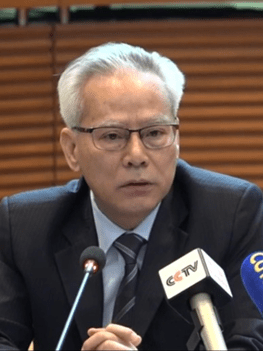
Sam Hou Fai
Of note, though, Sam will be the first individual from mainland China to govern Macau. He grew up in Zhongshan in Guangdong province, only moving to Macau in the 1980s, and so his election will mark a departure from the principal of “Macau people governing Macau”.
The move is also continuing a trend towards more direct control of the city by Beijing; his predecessor, Ho Iat Seng (賀一誠), was the first Chief Executive not to come from the dominant families in the city.
Sense of dissatisfaction
The change in leadership is noteworthy, as it suggests that Beijing is dissatisfied with the current administration’s failure to meet its goals.
After all, Beijing’s stated priority in recent years has been to diversify Macau’s economy away from gaming, and to advance the city’s integration into the Greater Bay Area, encompassing Guangdong province, Hong Kong and Shenzhen.
This election thus likely means an acceleration of both policies.
Capital outflows
Another priority for the new Chief Executive will the curtailing of capital outflows from China into Macao, which have historically underpinned runaway growth in Macau’s gambling sector, as discussed elsewhere on this blog.
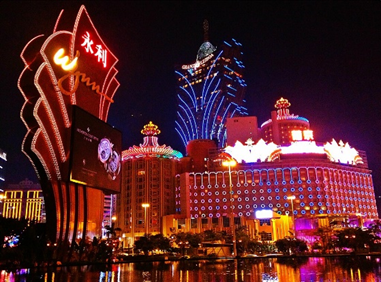
The bright lights of Macau’s casinos
Of course, Beijing has spasmodically acted to stop capital leakage since Xi Jinping took control of the Chinese Communist Party (“CCP”) in 2012, acting against triads, underground banks, and satellite casinos, which have sprung up around Southeast Asia in recent years.
However, Beijing’s ire towards capital outflows has grown of late, as the economy has weakened, and, in 2020, the central government designated capital outflows a matter of national security.
Indeed, the authorities have recently launched a nationwide initiative against illegal foreign exchange activities across China, with attention to Macau. The local authorities in August 2024 announced plans to criminalise illegal money exchange, and arrested a large number of currency dealers. More such arrests will likely follow, under the new Chief Executive’s lead.
What is also worth noting is that this latest campaign is part of a broader effort aimed at limiting the loss of funds through Macau.
Other associated steps have included the Macau government’s increasing of the requirements on the casino concessionaires to invest in the city in 2023, and the Chinese Ministry of Finance’s selling of bonds in Macau, seemingly as a means to channel money from Macau to its purposes.
Equally important, if still nascent, have been efforts to expand the use of a digital yuan in Macau, which could, in time, mean gaming taking place inside Chinese capital controls – although China’s government also seems to hope to use the digital yuan as a tool in trade with the Lusophone world.
Investor interests
The selection of the new Chief Executive, and the policies outlined above, will have significant implications for Macau’s casinos.
These policy shifts will probably reduce casino revenues, and hence pose risks to investors in Macau’s casino concessionaires – shareholders and bondholders alike. The threats to the US-owned casinos, such as Las Vegas Sands, MGM and Wynn Resorts, are especially severe, given geopolitical tensions.
Of course, there will be winners, too. Galaxy Resorts, as a Chinese-owned business, is in a better position than other casino concessionaires; and perhaps the hotel and resort sector will prosper.
An example for Hong Kong?
One final point is that Macau is instructive in another way, in that the former Portuguese colony is further down the path towards integration into mainland China than its neighbour Hong Kong.
Macau’s experience of ever-closer-integration may thus provide a guide for what is in store for that much larger enclave.
 Living with the Dragon
Leave a comment