Tensions between the Philippines and China have highlighted how key the South China Sea has become in the regional strategic contest between Washington and Beijing. This situation poses acute risks, notwithstanding some recent declines in tensions.
The lord giveth and taketh away…
Of particular note in recent weeks has been that Manila and Beijing appeared to reach a provisional agreement in late July 2024 over Second Thomas Shoal, the disputed feature on which is beached the rusting BRP Sierra Madre.
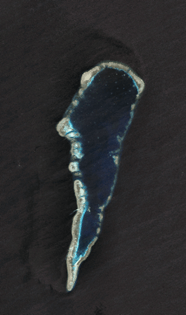
Second Thomas Shoal
This agreement should allow the Philippines to resupply and repair the vessel, without facing Chinese efforts to impede access (one sailor lost a thumb in a nasty tussle at sea). Any repairs will surely be well received by those posted to the rusting hulk.
However, shortly afterwards, a new dispute arose over the firing of flares by Chinese aircraft into the path of a Philippine plane over another disputed feature, further north, called Scarborough Shoal.
Beijing noted that the aerial move came in response to infringements of its sovereignty, but, in response, the Philippine government has said that it could readily review the agreement on Second Thomas Shoal.
That incident thus highlighted how tensions might easily reignite.
What is really at stake
One temptation is to see these Sino-Philippine tensions as sui generis, and hence of minimal importance. However, doing so would be a mistake.
What is becoming clear is that the Second Thomas Shoal strife is a key part of a much bigger, regional struggle for influence – as highlighted in prior posts.
Of particular importance in that context is that the Philippines is providing access to bases for US forces, which could be of great value in the event of a conflict in the Taiwan Straits.
A fraught relationship
Coverage about the disputes often notes that the Philippines is a US ally, under military treaty, so pointing to the risk of a wider war.
However, less mentioned is that Manila has a restriction on foreign military bases on its territory, written into its 1987 constitution – a result of its history of US colonialism, and associated sensitivities linked to the fall of Ferdinand Marcos, a close American ally.
Even so, Washington and Manila have successfully cooperated in recent years, including after the early 1990s departure of US forces from Clark Air Base.
This cooperation has worked through a rotating arrangement, mainly geared towards dealing with Islamist insurgents in the south, which allowed for an almost continuous deployment of US forces in the Philippines.
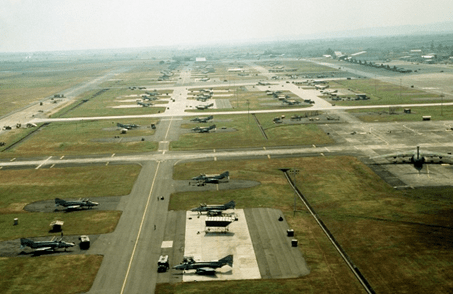
Clark Air base in the 1990s
In 2014, moreover, Washington and Manila agreed an Enhanced Defense Cooperation Agreement (“EDCA”), allowing for US access to five sites in the Philippines, for training purposes and the pre-positioning of equipment. The move was part of the Obama administrations “pivot” to Asia.
That agreement languished under former President Rodrigo Duterte, who favoured rapprochement with China, but a more pro-American stance by President Ferdinand Marcos Jr since 2022 has resulted in closer integration.
Indeed, in February 2023 Manila and Washington announced the use of four more sites, including a naval base, Camilo Osias, and airport, La-lo, both in Luzon’s Cagayan province, close to the Taiwan Straits. The other two sites were Balabec Island in Palawan, not far from Second Thomas Shoal, and Camp Melchor dela Cruz in Gamu.
Now, these latest measures are starting to bear fruit. For instance, the US Marine Corp flew F-35 missions from Luzon and US forces deployed Mid-Range Capability missiles temporarily to the northern Philippines as part of recent exercises. These newest deployments have hinted at an ability to target shipping south of Taiwan.
China’s response
Needless to say, China has watched these developments with (presumed) misgivings.
After all, a consensus has emerged in the US that China is an overt threat, and Beijing is increasingly stressing efforts to shore up national security in response. The war of words over Taiwan is also intense – adding to frictions.
Separately, and at a more strategic level, the US actions conflict with China’s efforts exert influence over its “near abroad” (to use a term much used by the Russians). Indeed, what China is doing in the South China Sea recalls US actions in the Caribbean in the 1900s – turning the sea into a “mare nostrum”, as with Rome’s Mediterranean.
Beijing thus seems to believe that the US is using to the Philippines as a means not only to prevent China’s dominance of the South China Sea, but also to shore up its relations with allies such as Korea, Taiwan and Japan – and hence the wider, US-led security framework.
It is in this context that China is pushing back, and not merely in response to minor territorial disputes.
What happens from here
The upshot, then, is that these issues in the South China Sea should be seen as part of the broader strategic contest now under way in Asia.
This situation thus poses real risks. One obvious concern is the prospect of an accident resulting in conflict, which could drag others into a fight.
However, equally possible is that this context evolves into a more complex, political test of strength. After all, Beijing could seek to “turn” the Philippines, as the US succeeded in doing with Anwar Sadat’s Egypt in the 1970s, so as to secure its strategic ends.
Either way, the game is afoot – and much is at stake in the South China Sea.
 Living with the Dragon
Leave a comment