Risks affecting foreign businesses operating in mainland China have worsened of late – but they are nothing new. Rather, companies have faced comparable challenges before, often much worse than today. Their experiences can provide lessons for executives schooled in happier times, who now need to understand that such political risks are no longer fanciful.
A tougher outlook
Businesses in China are struggling with a wide range of threats impinging on operations. Economic and financial weakness is one concern, and a rise in statist policymaking is another, posing challenges to businesses hoping to trade freely in stock markets, or to move funds out of China.
Scepticism towards foreigners is also on the rise. The prospect of boycotts or targeted regulatory action, perhaps related to data rules, is real. Executives may even face claims of acting on behalf of other states in this more paranoid environment, or find themselves exit bans in the context of commercial disputes.
Nothing new under the sun
Of course, such risks are not new in China. Swire Group, a company that has operated in China since the 1840s, was one of the biggest retailers of sugar around Asia prior to the First World War, through its Taikoo (太古) brand. The sugar was produced in a refinery in what is now Taikoo Shing on Hong Kong island.
However, the collapse in the 1920s of central government authority in China, a rise in banditry and warlord conflicts, and interruptions of riverboat links, almost entirely destroyed its distribution network across the country. Instances of fraud, Japanese competition, and a strike in 1923 and a boycott in 1925 only added to the problems.
Such risks bear comparison with the boycotts of businesses that voiced support for the protests in Hong Kong in 2019, the “closing” of China during COVID, and the rise in nationalist feeling today. After all, it is much harder to monitor a distribution network in China now than five years ago.
Shanghai dancehalls and capital controls
Other concerns arose in the 1930s for Sir Victor Sassoon, a scion of an Iraqi-Jewish family that had built a fortune in British India, and something of a playboy.
Sassoon had shifted his interests to Shanghai from India in the 1920s and 1930s, and profited hugely from real estate, by investing in hotels through the Cathay Land Company, the Cathay Hotel Company and other vehicles.
However, Sassoon saw his interests suffer hugely, after the Kuomintang (“KMT”) took power in Shanghai in 1927.
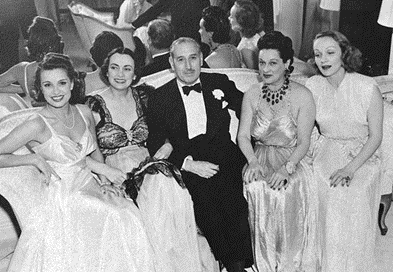
Victor Sassoon
In particular, the KMT government faced difficulties handling a rising price of silver in the US after the 1929 stock market crash, which drew the metal (the basis of China’s currency at that time) into America. The result was a de facto reduction in money supply.
In response, TV Soong (宋子文), who managed financial affairs for the KMT, called for the imposition of a tax on silver exports in the early 1930s, and then strong-armed Shanghai’s banks to halt exports of silver in 1935 under a “gentleman’s agreement”.
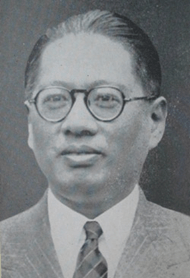
TV Soong
The restrictions essentially locked Sassoon’s interests into Shanghai, meaning that he was unable to sell down his assets, and move funds out of the city, prior to the Japanese invasion in 1937. In the ensuing war, he lost a great deal of wealth.
Again, a comparison with current problems is telling. Those silver restrictions resemble the capital controls currently in place in China, which oblige businesses to seek permissions to move funds. Worse, rumours are growing that the stock market collapse may encourage the government to tighten controls.
The Second World War and afterwards
The Second World War posed more existential risks. Most obvious was the destruction of property, with Swire ships sunk on the Yangtze or in Manila harbour, for instance. The Taikoo sugar refinery and dockyards in Hong Kong were also bombed and burned.
Similarly challenging, though, was the nationalization of assets that occurred across Asia in the wake of the war. Horace Kadoorie, of the family that controls China Light & Power in Hong Kong, had built a famous house in Shanghai, Marble Hall.
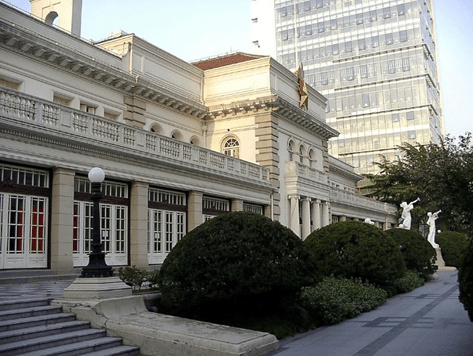
Marble Hall in Shanghai
Kadoorie moved to Hong Kong in 1948, though, ahead of the Communist takeover.
However, Soong Ching Ling (宋庆龄), sister of TV Soong but a supporter of the Chinese Communist Party (“CCP”), and the widow of Sun Yat Sen or Sun Zhongshan (孫中山), “requested” the hall for use by the Children’s Welfare Fund. The building subsequently was expropriated, and became the Children’s Palace, a venue for music, dance and other events for schoolchildren, under CCP control.
Unlike the Sassoons, the Kadoorie family successfully shifted their interests to Hong Kong, where they continue to hold an interest in China Light & Power (“CLP”), the main electricity provider. However, the statist climate now raises questions as to whether Chinese state owned entities may wish to take more control of this (and other) strategic utilities in Hong Kong.
Hostage capitalism
Other instances of “hostage capitalism” emerged after liberation in 1949.
Until the mid-1950s, the Chinese government would commonly refuse foreign companies permission to close down and repatriate funds or personnel, so as to ensure that operations ran on, and that funds continued to flow in. Eventually, the foreign businesses were allowed to sell out, usually after testy negotiations, and at a steep discount.
This “hostage capitalism” bears some resemblance to the challenges faced by private equity investors today, many of whom are unable to sell out of their Chinese investments, and so have to keep them afloat. Of course, the reasons for their being held captive today are primarily commercial – but regulatory factors are already a problem, and they will worsen in the event of a rise in regional tensions, or war.
The new climate
Looking back at these risks should be instructive for a generation of executives schooled in a merrily globalized economy, the runaway expansion of China’s economy in the last three decades, and a belief that political risk is of no concern.
Such executives certainly understand challenges such as fraud, corruption and the theft of intellectual property, but they have little to no experience in handling expropriation, targeted regulatory action, state intervention, or the destruction of plant or death of personnel.
Executives thus need to think, now, about how to handle such risks. After all, instability seems likely to intensify in the years ahead, and such threats no longer seem fanciful.
 Living with the Dragon
Leave a comment