A series of incidents in recent weeks along China’s seaboard, ranging from Japan to the Gulf of Thailand, have highlighted how precarious the regional security regime has become, and how broad is the area that could be contested in the event of conflict.
Sonic aggression
The first incident related to the use of sonar by CNS Ningbo, a People’s Liberation Army Navy (“PLAN”) vessel, when Australian naval divers from the frigate HMAS Toowoomba were under water attending to a ship’s propellor in international waters off Japan. The sonic pulses harmed the divers.
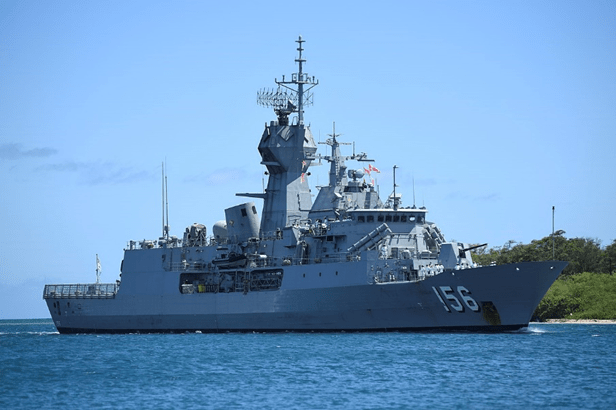
HMAS Toowoomba
The actions seemed to be part of China’s “grey zone” measures, which fall short of provoking conflict, but are inherently unfriendly in nature. The move also drew media attention to the presence of Royal Australian Navy vessels in Japanese waters, highlighting the increasingly close linkages amongst US treaty partners in the face of the challenge from China.
Indeed, in that context, it is worth noting that on 14 November 2023 Taro Aso, a former Prime Minister, called for Japan, which is already a partner of Australia (along with the US and India) in the Quadripartite accord, to join the AUKUS submarine arrangement. A debate is now under way as to the merits of its doing so.
Planning for evacuation
Separately, officials at the Japanese government’s Cabinet Secretariat visited Yamaguchi Prefecture in Honshu in late November 2023, and called on local authorities to prepare to receive evacuees from Okinawa in the event of war involving Taiwan. The Japanese government is also reportedly seeking to identify those requiring evacuation, which current estimates place at about 120,000 people.
The announcement was especially striking, as it follows comparable actions, such as an evacuation drill in Okinawa, which hosts US Marine Corp Base Camp Smedley D Butler, in March 2023. The Japanese authorities have also recently identified airports and ports requirement enhancement for military purposes, with a focus on use in the event of a Taiwan crisis. Clearly, Japan is preparing for a possible war.
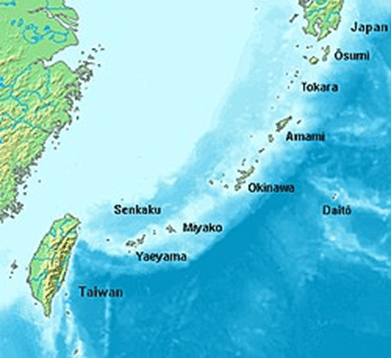
Japan’s southern islands are close to Taiwan
Tokyo’s actions seem wise, of course, coming as they do in the wake of the collapse of a prospective alliance between Taiwan’s opposition presidential candidates; their victory, which now seems unlikely, might have lessened tensions with China.
Second Thomas Shoal
The third incident related to US deployments into waters surrounding Second Thomas Shoal. Manila and Beijing contest this submerged reef in the South China Sea, off the island of Palawan, on which is beached a Philippines ship, the BRP Sierra Madre, a rusty Second World War vessel.
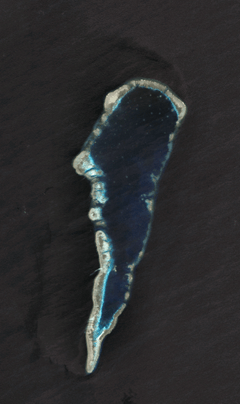
Second Thomas Shoal
However, the Marcos government has lately sought to emphasise claims over disputed parts of the South China Sea, including Second Thomas Shoal, in the face of assertive action by China’s coast guard and maritime militia.
Unable to respond owing to its extremely limited military capacity, though, Manila has turned to its US treaty partner, and joint US-Philippine air and sea patrols commenced in November 2023 in the South China Sea.
It is in that context that the Littoral Combat Ship USS Gabrielle Giffords steamed close to Second Thomas Shoal. The US has carried out comparable deployments before (albeit not in direct support of Philippine actions), and so was largely acting in line with prior Freedom of Navigation Operations (“FONOPs”).
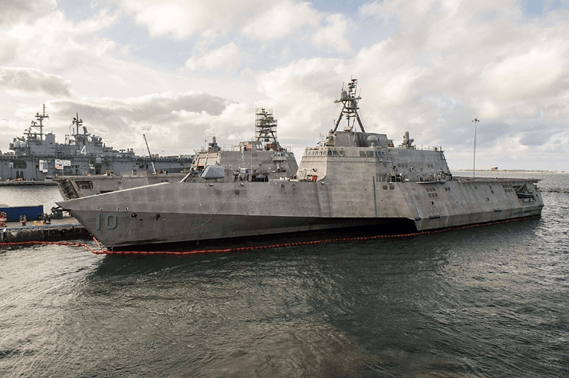
USS Gabrielle Giffords
However, the response from China was especially striking, with China’s Southern Military Theatre issuing a statement saying that the US had “seriously violated China’s sovereignty and security”. Its tone was much more assertive than in the past, hinting at a greater willingness to confront the US.
Overseas base in Cambodia
Finally, a PLAN vessel docked at the Ream Naval Base in Cambodia, thereby seemingly inaugurating that site in the Gulf of Thailand as a Chinese overseas military base.
US officials had identified in 2020 that China held a lease to use the site for 30 years, and Beijing was investing in facilities, such as a pier and drydock, large enough for a Chinese aircraft carrier.
Now, the arrival of a vessel has underlined how Ream could provide resupply and repair functions to PLAN vessels in the event of a conflict.
Regional security
None of these incidents in their own right are of great importance.
Taken together, though, they highlight how combustible the situation across East Asia has become, and hint at the huge area that could become contested in the event of a regional conflict.
A key takeway is that a minor accident could escalate quickly into something much nastier – and have implications that are significantly wider-ranging than expected.
Add in that the political calendar in the coming year is fraught with uncertainty (with Taiwan’s elections in January 2024, and those in the US in November 2024), and the scope for error is large – and growing.
 Living with the Dragon
Leave a comment