An investigation under way in Singapore into a major money laundering case has not only offered up enthralling images of gold bars, handbags and jewellery, but also provides insights into how capital flows out of China move across Southeast Asia.
Gold, Jewels and Property
Ten individuals were arrested in mid-August 2023 for forgery and other offences in Singapore. One leapt from a window of his luxury property, but injured himself, and hid in a storm drain in an effort to escape capture – to no avail. All are now in police custody and on trial.
Most of the group were originally from mainland China, notably Fujian province, although they also held “golden passports” from jurisdictions as varied as Cyprus, Cambodia, St Kitts and Nevis, and Turkey.
Court hearings have provided a window into their activities, with the prosecution asserting that these individuals engaged in money laundering through a wide range of transactions, buying property in high-end districts of the city, investing in securities, trusts and bank accounts, and loading up with Birkin bags and jewellery.
The assets seized have been estimated as worth more than SGD2.4 billion (about USD1.8 billion). One suspect alone reportedly held more than SGD200 million in property, including seven bungalows in the eye-wateringly expensive Sentosa Cove, 79 condominium units, and 19 commercial or industrial spaces. That suspect also made use of a technology company to move funds, and held large cash deposits at banks.
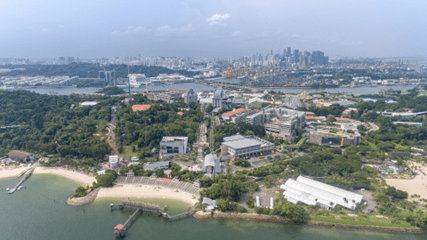
Sentosa
Where did the money come from?
The court case has suggested that the money related to online gaming. In particular, one of those involved was reportedly wanted by the People’s Republic of China (“PRC”) Public Security Bureau (“PSB”) of Zibo city, Shandong province, as a result of investigations into the Heng Bo Bao Wang (恒博包网) online gambling syndicate. The PSB had called on him to return to the PRC, and surrender to the authorities.
The case has thus provided some insight into how criminal networks operate around Southeast Asia. After all, the promotion of online gaming is illegal in the PRC, with the exception of Macau; and, as a result, online gaming sites have sprung up in the Philippines or Cambodia. Seemingly, these sites are dealing in huge sums of cash.
Capital controls
This case relates to more than online gaming, though. What is worth noting is that the PRC operates a tight system of capital controls – the Chinese yuan is not freely exchangeable, unlike the Macau pataca (pegged to the Hong Kong dollar), and the Hong Kong dollar (pegged to the US dollar).
Moving funds out of China thus requires the approval of key government agencies, most notably the State Administration of Foreign Exchange (国家外汇管理局) (“SAFE”). Such restrictions are one reason why investors such as Mark Mobius have claimed that they cannot shift money out of China.
Many people do want to take money out of China, though, and for various reasons. A major driver is fear, of course, in the context of anti-corruption investigations, arbitrary actions against prominent tycoons, and a desire for more “leftist” economic policies, encapsulated in the Chinese Communist Party’s (“CCP”) call for “common prosperity” (共同富裕).
Equally as important, though, is the “pull factor”. The weakening of China’s economy, declining yields on investment, and rising interest rates in the US and elsewhere, mean people are seeking better returns elsewhere.
Crucially, then, some gaming sites provide mechanisms not only to gamble, but also to move funds out of China. Users can pay into the sites from China, but withdraw earnings elsewhere.
“Extralegal” mechanisms run by the sites then balance the transactions in imaginative ways – perhaps through trade-based money laundering or off-book property transactions (although such activity has not been reported in relation to this case).
Macau’s legacy
These mechanisms are not new, of course. Rather, they are just the latest manifestation of comparable activities that emerged since 2002 in Macau, amongst other places, thanks to the role of junket promoters, some of whom are alleged to have triad links.
In 2012, for instance, Macau’s casinos reported revenues of over USD40 billion – which some claimed was an understatement of perhaps six to eight times, given side-betting.
Of course, not all of this money was betting; rather, the gamblers operated within a financial ecosystem built around casinos, pawn shops and jewllers, trading companies, property agents, underground banks, and triad societies – which together moved large sums of money out of China.
The Chinese government started to crack down on such activities in Macau from about 2012, though, most notably by targeting VIP gamers. Accordingly, online gaming sites have since sprung up across Asia, outside direct Chinese control, playing a comparable role in offshoring capital.
A looming crackdown
There is one crucial difference, however. Outflows in 2012 came at a time of high inflation in the PRC. Macau thus acted as a sterilisation channel, reducing money supply, and hence enjoyed a degree of unspoken, official acquiescence.
Now, by contrast, China faces a weakening economy, a slow-motion financial crisis, and troubling deflation, in the context of much heightened international tensions.
Capital outflows accordingly pose acute risks to national security, meaning that the Chinese government will view offshoring of funds much less kindly going forward.
The impact to come
The money laundering case in Singapore is thus instructive, not only in terms of the role of criminal activities across Asia, but also in the context of outflows of capital from China.
Quite how China responds to this strategic threat in the coming months will have a serious impact on capital flows across Asia – and on those industries and places that have benefitted from the inflow of funds to date.
 Living with the Dragon
Leave a comment